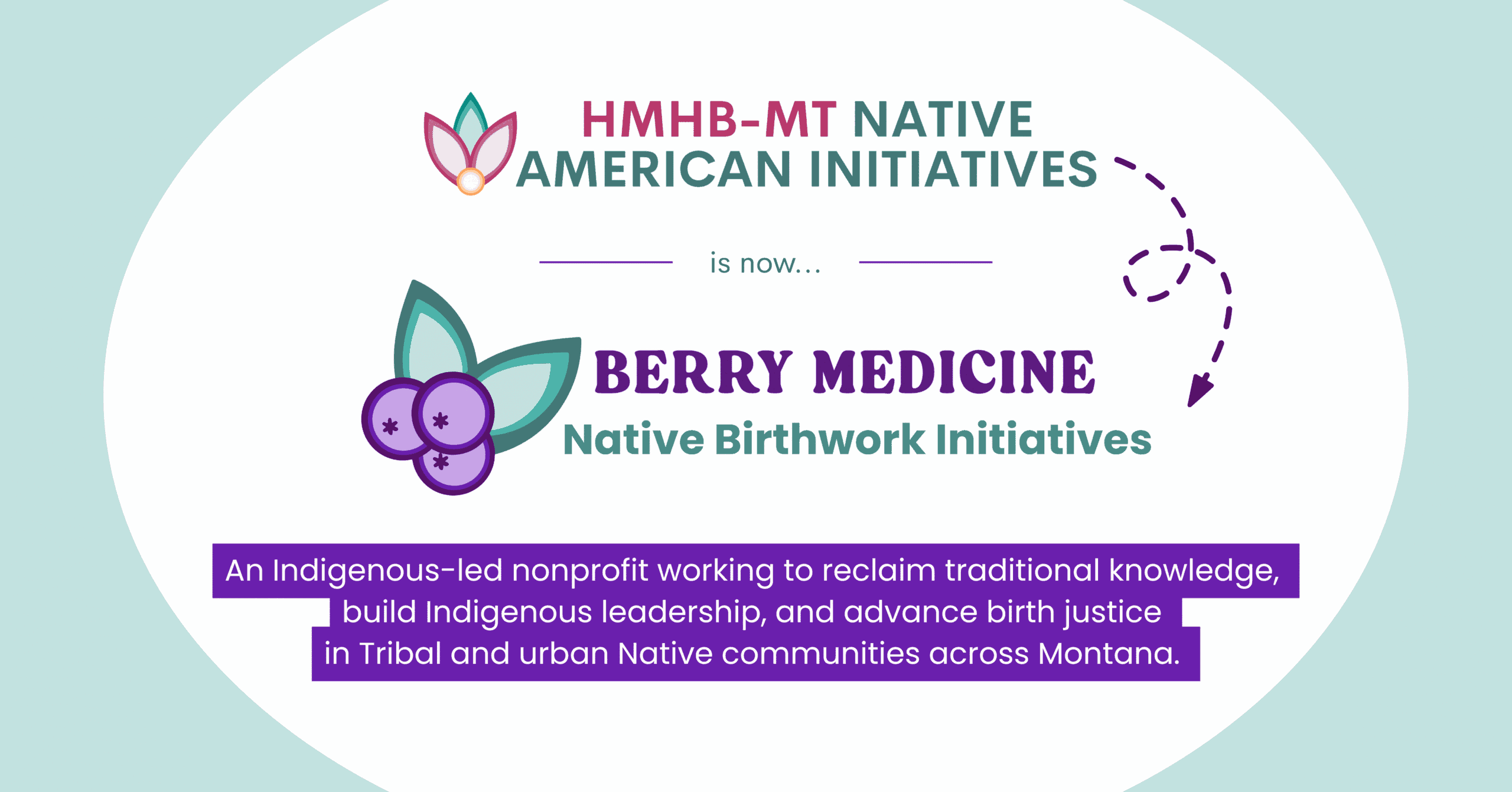
On April 1, 2026, HMHB Native American Initiatives (HMHB-NAI) fully transitioned to independent operation as Berry Medicine Native BirthWork Initiatives.
Berry Medicine is an independent Indigenous-led nonprofit, with HMHB serving as a fiscal sponsor. All HMHB-NAI staff have transitioned to become employees of Berry Medicine and HMHB will continue to champion and support them and their important work for Indigenous communities.
From April 1, 2026 forward, all HMHB-NAI programming, including BirthWorker support, group convenings, community outreach, and more will occur within Berry Medicine. Please visit berrymedicine.org and contact info@berrymedicine.org for more information.
The Story That Shaped Berry Medicine
In 2022, HMHB partnered with Dr. Amy Stiffarm to build out a program dedicated to improving maternal and child health in Indigenous communities, calling it the Native American Initiatives program (HMHB-NAI). HMHB-NAI was created to continue the work initiated by the LIFTS in Indian Country project, in which HMHB worked with Tribal Communities across the state to build the Reservation-specific resources for the LIFTS Resource Guide.
Since its establishment, HMHB-NAI has grown relationships with Tribal, state and national partners and has become the preeminent Indigenous maternal health entity in Montana. The team has grown from one to three staff members. They have created Indigenous Birth Preference Guides, provided Cultural Safety Trainings, hosted an Indigenous Lactation Training, convened the Indigenous Birthworker Network and the Tribal Maternal Health Workgroup, and so much more. HMHB has supported this growth, helping to advance Native-led maternal, infant, and early childhood health initiatives across Montana.
To continue to grow the impact of this critical work, the HMHB-NAI program will transition to an independent, Indigenous-led nonprofit, Berry Medicine Native Birthwork Initiatives. Berry Medicine is grounded in community relationships, cultural knowledge, and collective care. Their work will support Indigenous Birthworkers and Tribal Communities in strengthening the health and wellbeing of Native families by restoring Indigenous cultural practices related to pregnancy, birth, lactation, and early parenting.
HMHB is proud to continue investing in Indigenous leadership capacity by supporting the HMHB-NAI team as they transition to an independent nonprofit organization, and will serve as the fiscal sponsor for Berry Medicine. HMHB and Berry Medicine leadership look forward to maintaining a collaborative relationship that leverages the expertise and capacity of each organization to advance maternal and child health systems in Montana.
We are proud to have played a role in establishing Montana’s first Indigenous-led maternal, infant, and early childhood health-focused nonprofit organization and we enthusiastically look forward to continuing to champion, support and partner with Dr. Stiffarm and her team in their important work.
Please help us in celebrating this milestone!

HMHB-NAI Projects
A Strategy To Support Perinatal Mental Health By Collaborating With Tribal Communities In Montana
Staff at Healthy Mothers, Healthy Babies – The Montana Coalition (HMHB) authored an article that featured in the esteemed national publication, Health Affairs, in their April 2024 issue on Perinatal Mental Health and Wellbeing. The article highlights work completed to include family-supporting resources on Reservations in Montana into the LIFTS Online Resource Guide. This project was completed in partnership with HMHB and Dr. Amy Stiffarm while she was a graduate student at the University of North Dakota in the Indigenous Health Program.
LEARN MORE about the Health Affairs Article
Among Indigenous women and birthing people, reported rates of perinatal mental health complications are consistently higher than in the general US population. However, perinatal mental health programs and interventions tend to focus on the general population and do not account for the unique experiences and worldviews of Indigenous Peoples. We highlight a collaborative strategy employed by a Montana nonprofit to engage Tribal communities in completing a statewide online resource guide designed to help pregnant and parenting families find resources, including mental health and substance use treatment options, within and beyond their local communities. Based on this strategy, cultural resources relevant to Tribal communities were added to the resource guide. Agencies committed to addressing perinatal mental health disparities among Indigenous populations should consider similar strategies to share power with Tribal communities and collaboratively create culturally congruent programs and interventions.
Read the ArticleCultural Safety for Indigenous Mothers and Birthing People
In 2023, a cultural safety toolkit was created for those who provide care or work with families during the perinatal period. Connect with Dr. Stiffarm to schedule a training at info@berrymedicine.org.
Bridging Native Culture: Perinatal Support Guides
These Indigenous Perinatal Preference Guides were created by lived experts—mothers, aunties, Birthworkers, and nurses. It is crucial for Indigenous birthing patients to feel empowered, informed, and culturally safe when sharing their preferences, goals, and support systems with their providers. Equally important is for providers to share these guides with their Indigenous patients, fostering a respectful and collaborative space for learning and connection with patients and their support systems. Access the birth preference guides at berrymedicine.org.
LIFTS in Indian Country
The LIFTS (Linking Infants and Families to Supports) Resource Guide is an online resource for Montana families state-wide. In the building phase of the guide, HMHB hired an Indigenous person with experience in maternal child health to lead efforts in including Reservation Communities in Montana within the LIFTS Resource Guide.
LEARN MORE about LIFTS in Indian Country
This was the start of the LIFTS in Indian Country Project. The first year of the project involved collecting information on resources for each of the communities. The second year we held meetings virtually with each reservation. These meetings initiated relationships and the conversations led to the creation of the ‘Native Cultural Connections’ resource category. Please check the LIFTS Resource Guide and see if your program is included. You can add your program as well as events right on the site!
Narrow your LIFTS search by selecting “Native Cultural Connections” under Service Type