Keeping Kids Safe on the Road: Montana’s Updated Car Seat Guidelines

By Safety

Car seats are essential for safety.
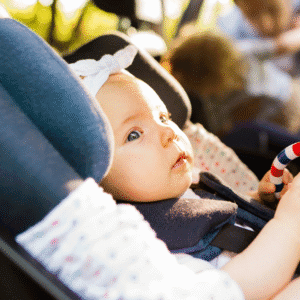
Car seats are a vital part of early childhood care, a boon to public health, and one of the easiest ways to keep little ones safe on Montana roads. But they can also be confusing. With the seemingly infinite combination of makes and models of cars to connect to, and each manufacturer’s unique system of buckles and attachments, car seat use and installation can be a little overwhelming to even the most seasoned parent. Additionally, car seat laws can vary from state to state, with guidelines that can be hard to follow. The rubric of height, weight, and age recommendations can be complex.

Car seat use is particularly important in Montana, as our traffic fatality rate exceeds the national average. Car seats and booster seats are proven to keep children safer in road accidents, reducing the risk of death by 71% for infants, and by 54% for toddlers ages 1 to 4 years. For children 4 to 7 years, booster seats reduce injury risk by 59% compared to seat belts alone. (Source: CDC)

Good news incoming!

The good news is that starting October 1, a new car seat law goes into effect in Montana, one which aims to make guidelines easier to understand, puts our state in line with national safety standards, and aims to increase the number of babies and kids traveling safely on our highways and back roads. The guidelines are as follows:

  • Children under age two must ride in a rear-facing car seat that meets federal safety standards. Keeping children rear-facing for as long as possible is the safest option. If you need help, Child Passenger Safety Technicians across the state are available at no cost to ensure your car seat is installed correctly.
  • For kids ages 2 to 4, use a rear or forward-facing car seat with a harness.
  • For children ages 4 to 8, they should use a forward-facing seat with a harness or a booster seat, depending on their size.
  • Once a child is 9 years old or has outgrown their booster seat, they can switch to an adult seat belt, but only if it fits them correctly. Always follow the manufacturer’s instructions to ensure every seat and belt is used properly.

(Source: Montana Department of Public Health and Human Services (DPHHS) )

For communities in need, HMHB is able to offer free car seats through our Safe Seat for Baby program, including installation and training guidance by a certified professional. Availability is limited, based on funding and inventory, but we invite inquiries from public health departments or other family support organizations.

Kudos to our state legislators for passing such a valuable and common-sense law!

Need help installing a car seat? Check the LIFTS Online Resource Guide under “Car Seat Installers” to find providers in your community.
Prioritizing Fathers: Join PSI’s 2-Day Paternal Mental Health Training

By Dads, Dads, Parenting

Written by Adriana Reyes de Merkle, MT PSI Chapter Chair


postpartum support international Montana chapter While the world is becoming more aware of maternal mental health, fathers are often overlooked in the perinatal period. Yet, 1 in 10 fathers will experience depression or anxiety during pregnancy or the first year postpartum [1,2,3]. These challenges can deeply affect the entire family, including the emotional and developmental well-being of their children.

That’s why Postpartum Support International (PSI) is proud to offer a comprehensive 2-day training dedicated to Paternal Mental Health. This interactive and evidence-based training is designed for anyone working with fathers during the perinatal period.

What to Expect from the Training

This two-day immersive experience will dive deep into the unique mental health needs and experiences of fathers. Topics covered include:

  • Bias in Paternal, Perinatal Mental Health
  • Men, Masculinities, and Mental Health
  • The Psychology of Early Fatherhood
  • Screening and Assessment
  • Dads and PMADs (Perinatal Mood and Anxiety Disorders)

In addition to lectures and case-based learning, the training includes:

  • Networking opportunities with peers and experts
  • A powerful Fathers Panel

Why This Training Matters

The statistics speak for themselves:

  • Depression and anxiety are twice as common in expecting and new fathers compared to global estimates in men. [1,4]
  • Fathers may show different symptoms than mothers—men are more likely to report physical symptoms like sleep disturbances, headaches, fatigue, and psychomotor changes such as restlessness or muscle tension. [10,11]
  • Emotional symptoms may also present differently—many fathers exhibit irritability, anger, aggression, or withdraw from relationships. This can lead to isolation, avoidance behaviors, risk-taking, and substance use. [12,13]

Most importantly, untreated paternal mental health issues can have long-term negative consequences on child development, increasing the risk of Adverse Childhood Experiences (ACEs) and their health multiple domains. [2,8,9]

 Why You Should Attend

By attending this PSI training, you’ll gain the skills and knowledge to better serve fathers during the perinatal period, reduce stigma, and support stronger family systems. Whether you’re a clinician, advocate, researcher, or community worker, this training will equip you to recognize and respond to the mental health needs of dads with greater confidence and compassion.

Let’s break the silence around paternal mental health and create systems that support all parents.

Be part of the change and register today at: https://postpartum.net/training/paternal-perinatal-mental-health/

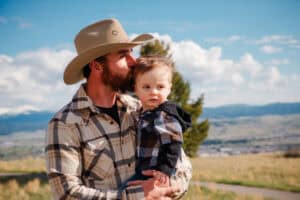
dad and son 

  CITATIONS:

  1. Paulson, J. F., & Bazemore, S. D. (2010). Prenatal and Postpartum Depression in Fathers and Its Association With Maternal Depression. JAMA, 303(19), 1961. https://doi.org/10.1001/jama.2010.605
  2. Ansari, N. S., Shah, J., Dennis, C., & Shah, P. S. (2021). Risk factors for postpartum depressive symptoms among fathers: A systematic review and meta‐analysis. Acta Obstetricia et Gynecologica Scandinavica, 100(7), 1186–1199. https://doi.org/10.1111/aogs.14109
  3. Leach, L. S., Poyser, C., Cooklin, A. R., & Giallo, R. (2016). Prevalence and course of anxiety disorders (and symptom levels) in men across the perinatal period: A systematic review. Journal of Affective Disorders, 190, 675–686. https://doi.org/10.1016/j.jad.2015.09.063
  4. Leiferman, J. A., Farewell, C. V., Jewell, J., Rachael Lacy, Walls, J., Harnke, B., & Paulson, J. F. (2021). Anxiety among fathers during the prenatal and postpartum period: a meta-analysis. Journal of Psychosomatic Obstetrics & Gynecology, 42(2), 152–161. https://doi.org/10.1080/0167482X.2021.1885025
  5. Fisher, S. D., & Garfield, C. (2016). Opportunities to Detect and Manage Perinatal Depression in Men. American Family Physician, 93(10), 824–825. www.aafp.org/pubs/afp/issues/2016/0515/p824.html
  6. Matthey, S., Barnett, B., Kavanagh, D. J., & Howie, P. (2001). Validation of the Edinburgh Postnatal Depression Scale for men, and comparison of item endorsement with their partners. Journal of Affective Disorders, 64(2–3), 175–184. https://doi.org/10.1016/S0165-0327(00)00236-6
  7. Edmondson, O. J. H., Psychogiou, L., Vlachos, H., Netsi, E., & Ramchandani, P. G. (2010). Depression in fathers in the postnatal period: Assessment of the Edinburgh Postnatal Depression Scale as a screening measure. Journal of Affective Disorders, 125(1–3), 365–368. https://doi.org/10.1016/j.jad.2010.01.069
  8. Singley, D. B., Cole, B. P., Hammer, J. H., Molloy, S., Rowell, A., & Isacco, A. (2018). Development and psychometric evaluation of the Paternal Involvement With Infants Scale. Psychology of Men & Masculinity, 19(2), 167–183. https://doi.org/10.1037/men0000094
  9. Pedersen, S. C., Maindal, H. T., & Ryom, K. (2021). “I Wanted to Be There as a Father, but I Couldn’t”: A Qualitative Study of Fathers’ Experiences of Postpartum Depression and Their Help-Seeking Behavior. American Journal of Men’s Health, 15(3), 15579883211024376. https://doi.org/10.1177/15579883211024375
  10. Rabinowitz, F. E., & Cochran, S. V. (2008). Men and Therapy: A Case of Masked Male Depression. Clinical Case Studies, 7(6), 575591. https://doi.org/10.1177/1534650108319917
  11. Dziurkowska, E., & Wesolowski, M. (2021). Cortisol as a Biomarker of Mental Disorder Severity. Journal of Clinical Medicine, 10(21), 5204. https://doi.org/10.3390/jcm10215204
  12. Eddy, B., Poll, V., Whiting, J., & Clevesy, M. (2019). Forgotten Fathers: Postpartum Depression in Men. Journal of Family Issues, 40(8), 1001–1017. https://doi.org/10.1177/0192513X19833111
  13. Molloy, S., Singley, D. B., Ingram, P. B., Cole, B. P., & Dye, A. R. (2021). ¡Qué Padre! Measuring Latino Fathers’ Involvement with Infants. Family Relations, 70(5), 1449–1464. https://doi.org/10.1111/fare.12543

Connection, Care, and Collective Strength: Highlights from the 2025 Perinatal Mental Health Conference

By Perinatal Mental Health Conference

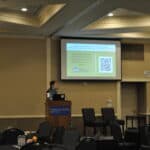
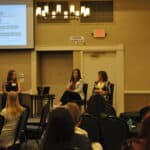
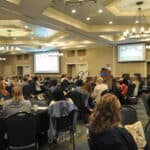
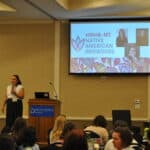
In June 2025, perinatal mental health professionals from across Montana and the West gathered in Helena for the 8th Annual Perinatal Mental Health Conference, hosted by Healthy Mothers, Healthy Babies. The event continues to grow in energy, attendance, and impact.

As the landscape of maternal and infant health continues to shift at a rapid pace, one message rang out clearly across sessions and conversations: connection is vital. Staying connected to peers, to new research, and to one’s own well-being is essential for anyone supporting moms, babies, and families through the perinatal period. 

A Growing and Diverse Community

This year’s fully in-person format featured a wide range of new speakers and first time attendees, including professionals from Canada, Wyoming, and across Montana. In addition to our mainstage presentations, we featured breakout sessions organized by professional role, offering tailored content for therapists, home visitors, doulas, physicians, and others supporting perinatal health.

At HMHB, we recognize how easy it can be to lose sight of the needs of caregivers who are working so hard to support others. With this in mind, the 2025 conference placed a new emphasis on care for the caregiver. Attendees could visit a dedicated wellness room, participate in guided mindfulness sessions, or take a break for a free chair massage—reminders that sustainable service starts with self-care.

Gratitude for Our Partners

A conference of this size and scope is only as successful as the people behind it, and we remain grateful for the generosity of our sponsors, including our presenting partner, the Department of Public Health and Human Services (DPHHS); our Platinum Sponsors, the Montana Pediatric and Adolescent Mental Health Access Line (MTPAL); and the Montana Obstetric and Maternal Support (MOMS) Program.


Planning is already underway for the 2026 Perinatal Mental Health Conference with some exciting changes in the works! We can’t wait to build on this year’s momentum and bring our community together once again. Stay tuned for a Save the Date—it’s coming soon! 

Want to stay in the loop about next year’s conference and other perinatal mental health events across Montana? Subscribe to our newsletter!


Family Care Spaces Across Montana

By Breastfeeding, Community, Indigineous Maternal Health

By Diona Buck, Native American Initiatives Program Coordinator

Photos contributed by MOMS and local Indigenous BirthWorkers


A Family Care Space is a space where mothers, parents, and families can come to feed their babies, change their baby’s diaper, and receive educational materials, and most importantly connect with local BirthWorkers. While the concept of Family Care Spaces at public events is not the first of its kind, the meaning of this movement for Tribal Communities in Montana lies in something deeper: the reclamation of Indigenous traditional ways.
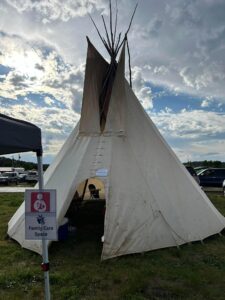
 

Families attending cultural or public events often have to navigate the unique challenges like feeding their infants, changing diapers, or simply finding a quiet private area to care for their young children. Often times we see parents leaving events to go change or feed their babies in their cars, making these tasks harder than they should be. These needs, though common, are rarely addressed in event planning.


Family Care Spaces across Montana were developed not just to meet these needs, but to do so in a way that honored and recentered Indigenous Traditional Knowledge around the sacredness of birthing, parenting, and raising the next generations. These spaces are a reminder that as Indigenous people, we once surrounded birthing people with ceremony, care, and collective support. Parenting was not meant to be done in isolation but in community. It takes a village to raise a child.
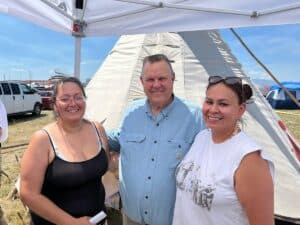
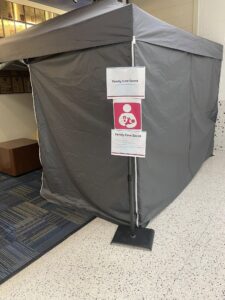
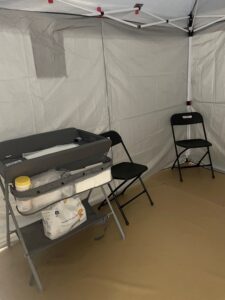
 

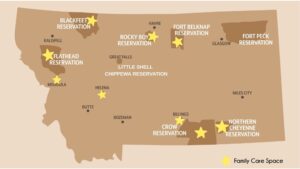
A total of nine Family Care Space Kits, each equipped with a canopy tent with sidewalls, a portable diaper changing table, and a table and chairs, were funded through the Montana Obstetrics and Maternal Support (MOMS) program. These kits were distributed to six Tribal and three Urban Indian Communities across Montana to support the creation of Family Care Spaces into their communities. Since 2024, at least a dozen Family Care Spaces have been set up at local events and gatherings to support families.


Today, Indigenous doulas, lactation consultants, and maternal health champions are leading the way, working with community organizers to integrate these spaces into powwows, health fairs, and cultural gatherings. Key maternal health champions include Tribal Health programs, Public Health Nursing programs and Urban Indian organizations who recognize the importance of providing these spaces as a community. Family Care Space kits are stored with local organizations that have taken the initiative to lead this effort in their communities. But this work is not done alone. At its core, this initiative is about community collaboration, bringing together BirthWorkers, families, Elders, health departments, and event organizers to uplift and care for our families.


HMHB Native American Initiatives is able to continue supporting the Family Care Space initiative. Vital to this work is Diona Buck, who is Nakoda from the Fort Belknap Indian Community and a descendant of the Aaniiih Tribe and currently serves as the Native American Initiatives Program Coordinator. In her role at HMHB, Diona continues to uplift and expand Family Care Spaces across Montana by connecting with Indigenous BirthWorkers and maternal health champions and guiding communities in creating these spaces.

The Family Care Space Toolkit was developed in January 2024 by Diona Buck. If you or your organization are interested in bringing a Family Care Space to your next event or would like to collaborate, we encourage you to reach out to Diona at diona@hmhb-mt.org. We would be honored to connect you with local maternal health champions and support you in creating a space that reflects and uplifts your community.


Honoring Stories. Elevating Care.

By Maternal Mental Health

By Emily Freeman, HMHB Storytelling Coordinator

Photos by Kim Giannone

May is Maternal Mental Health Month.

Maternal Mental Health Month can be a good time to remember that motherhood doesn’t always feel – on the inside – quite the same way it appears on the outside. All manner of challenges and stressors may lurk behind the smiling family portrait posted on social media. That perfect mom you see at pre-school pick-up? She may be holding back deep grief over a lost pregnancy, or shame about needing help with a problem she can’t yet put words to, the solution to which she can’t yet identify. 

Perinatal mental health challenges can vary widely. While some issues may require robust support from trained professionals and systems, others can be helped along through person-to-person, community-based care, which we can all be a part of. This can be as simple as smiling at a struggling mom to make her feel seen, and not like her crying baby is a burden; it can be a few small words spoken to a stranger in line at the grocery store: You’re doing great. It can be a weekly moms meetup at the park that begins as a group of strangers, and soon becomes a place to connect, to vent, to heal. These points of human connection are so important. 

Real Stories from Montana Moms

At HMHB, Maternal Mental Health Month provides us with an opportunity to highlight some of the lived experiences that mothers across the state have been bold and generous enough to share. In last year’s issue of LIFTS magazine, Shayla Horner wrote about the support and medical advice she received for her bipolar disorder, allowing her to become the strong and stable mom her daughters deserve. Kelsie Christensen wrote about the encouragement she received from a local moms group which helped her manage her anxiety in the early months of motherhood. On the Mother Love podcast, Rachael Watters shared her harrowing journey through postpartum psychosis, and how she continues to grow and heal.

Insights from Perinatal Mental Health Experts

In addition to these invaluable stories from moms, we’re honored to be able to share the lived experience of our trusted network experts and providers working with, and for, moms and families during this season of life. In the 2023 edition of LIFTS, Dr. Ariela Frieder offered her wisdom and expertise as a perinatal psychiatrist, including a perinatal mood and anxiety disorder checklist for moms, and resources to guide them towards getting the help they might need.
Recent guests on the Mother Love podcast have included Amy Lowney, a labor and delivery nurse who pivoted to postpartum doula work to better address the mental and emotional needs of moms after they left the hospital. Last year, we spoke with perinatal mental health expert Diana Barnes, an episode which not only addressed the way that maternal mental health can have unintended legal consequences, but provided an opportunity for listeners to hear mothers across two generations in conversation about their own experiences with postpartum mood disorders.  

Explore the LIFTS Resource Guide

Maternal Mental Health is a good time to share and bookmark our LIFTS online resource guide. LIFTS offers a searchable, and frequently updated, database of resources around the state, with categories such as Mental Health Providers, Family Support and Education, Cultural Connections, and more. It’s a great resource to share with parents, or with providers who interface with, and support, families during this season of life. 

In June, we’re hosting the 8th annual Perinatal Mental Health Conference, a chance for providers from across the state to come together to share, strategize, and enjoy the camaraderie of a vast network of those who work collectively to improve and sustain the health of moms in our state. We’re looking forward to learning together, and pooling the knowledge that each of us will bring from our different pocket of this vast and diversely resourced state. You can get a taste of the conference by viewing Dr. Samantha Greenberg’s “Perinatal Mental Health 101” session from last year’s conference. If you’d like to join us this year, you can find more information and register here.


The Growing Movement of Indigenous Birthworkers in Montana

By Birth, Caregiving, Native American Initiatives, Native Cultural Connections

Written by Chelsea Bellon

Photos courtesy of Julianne Denny


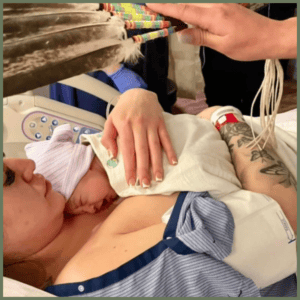
In many Indigenous communities, birth is more than a medical event—it is a sacred ceremony, deeply rooted in tradition, community, and ancestral knowledge. While the term “Doula” is widely recognized today, its origins are tied to Western frameworks that may not fully capture the depth of Indigenous birthing practices. Long before Western society formalized the role of Doulas, Indigenous families, Elders, and community members played an essential part in supporting birth as a ceremony.
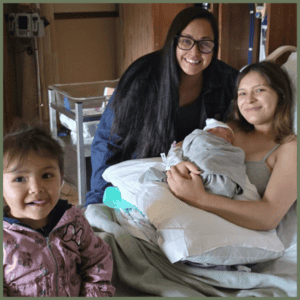
Today, many Indigenous communities use the terms Birthworker and Doula interchangeably, reflecting both historical traditions and contemporary roles. Birthworkers provide non-medical support before, during, and after childbirth, offering emotional, spiritual, and physical care. Birthworkers provide information around perinatal education, community resources, and advocacy support. Many consider this work a calling—”heart work” that centers ceremony and connection, creating a meaningful and supported start for both parents and baby.

Strengthening Indigenous Birthwork in Montana

Since the introduction of the Indigenous Full Spectrum Doula training to Montana’s Tribal communities in 2022, the movement of Indigenous Birthworkers has gained remarkable momentum. Trainings held across reservations have supported more than 80 Birthworkers, empowering those in both rural and urban communities throughout the state. Following training efforts supported by the Montana Obstetrics & Maternal Support (MOMS) program, newly trained Birthworkers sought continued education, mentorship, and community. In response, the Native American Initiatives (NAI) Program with Healthy Mothers, Healthy Babies – Montana (HMHB-MT) cultivated a space for growth, connection, and collaboration.

Through monthly gatherings, Birthworkers from across Montana have built a network to share successes, navigate challenges, and learn from one another. Under the leadership of NAI Program Director, Amy Stiffarm, the group has welcomed guest speakers and educators to help Birthworkers develop their skills and expand their impact.

  • Kendra Potter, a Birth Doula and Trainer from Missoula, has provided mentorship on balancing birthwork with family life and other job responsibilities.
  • Tina Begay of Redtail Accounting has shared insights on marketing, networking, and business growth for Birthworkers.
  • Diona Buck, representing the MOMS Program provided guidance and resources for Indigenous Birthworkers to engage and support families and elders in their communities. The Family Care Space initiative was formed to provide supplies for communities to create a breastfeeding and respite space for events such as pow wows, basketball games, health fairs, celebrations, and more. The Family Care space was intended to be led by the local Indigenous Birthworkers; 15 Family Care Spaces were sent out to rural and urban communities across Montana.

  • Most recently, the group welcomed Glenda Abbot, founder of the Indigenous Birth Justice Network in Canada, which now extends into Washington State. She introduced valuable perspectives on land-based birthing practices and the role of Birthworkers in community healing and revitalization.

Join the Indigenous Birthworker Network

The Indigneous Birthworker Network of Montana continues to grow, providing a space for Indigenous Birthworkers, past Doula training participants, and advocates to connect with a supportive community, access valuable resources, receive mentorship and advocacy to strengthen skills and expand culturally centered care. The Indigenous Birthworker Network of Montana fosters collaboration, ensuring Indigenous Birthworkers are recognized, supported and uplifted in their roles. The group meets every third Thursday of the month from 6:00 PM – 7:30 PM and welcomes those who are passionate about supporting Indigenous birthwork in Montana.

For more information or to join the meetings, contact Chelsea Bellon at chelsea@hmhb-mt.org.

Together, this network is strengthening the path for Indigenous Birthworkers, ensuring that birth remains a ceremony and community-centered care continues to thrive for future generations.

To find Doulas and Birthworkers near you, use the category “Doulas and Other Birth Professionals” on LIFTS!

linking infants and families to supports

Celebrate National Home Visiting Week: April 21 – 25, 2025

By Early Childhood, pregnancy

National Home Visiting Week is almost here!

The week of April 21–25 is a time to spotlight the essential role home visiting programs play in strengthening Montana families during pregnancy and early childhood.  Whether it’s offering early nutrition and lactation support or simply providing encouragement and guidance during those overwhelming early days, the impact of home visiting is tremendous.
What Is Home Visiting?

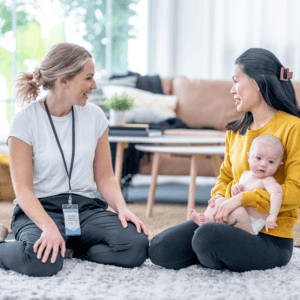
Home visiting is a voluntary, evidence-based service that connects trained professionals—like nurses, social workers, and child development specialists—with expecting parents and families with young children. These programs provide coaching, education, and emotional support tailored to each family’s unique needs.

Why It Matters

Studies consistently show that home visiting leads to:

  • Improved maternal and infant health
  • Increased school readiness
  • Strengthened parent-child relationships
  • Reduced instances of child maltreatment
A Thank You to Montana’s Home Visitors

We want to take this opportunity to express our deepest gratitude to the home visitors across Montana who show up every day to support families. Your dedication creates ripples of positive change that last a lifetime. Thank you for the care, compassion, and consistency you bring to your work.

Home Visiting Frequently Asked Questions

(As featured in the 2024 issue of LIFTS magazine, alongside real family stories highlighting the life-changing impact of home visiting.)

What is a home visiting program and how can it benefit my family?

Home visiting is a voluntary, proven support and coaching service that strengthens families through pregnancy and early childhood. Trained home visitors, such as nurses and early childhood specialists, work with expecting parents and caregivers of young children, to build parenting skills and connect families with needed services to support optimal physical, social, and emotional child development.

Who can participate in a home visiting program?

Eligibility for home visiting programs varies by program, but some are available regardless of income or background. Currently, not all areas in Montana have the same access to home visiting programs, but statewide work is being done to change this!

Can both parents participate in the visits?

Absolutely! Home visiting programs encourage the involvement of both parents. Mom, dad, grandparents, siblings and any caregiver who is important in the child’s life are usually welcome to participate!

How do I sign up for a home visiting program?

The best way to sign up for home visiting is to reach out to a local program near you. You can use the LIFTS Online Resource Guide to find home visiting sites across Montana by typing in “home visiting” in the Search feature. If you have trouble locating one, please call the LIFTS Warmline at (406) 430-9100 for assistance.

What happens during a home visit?

During a home visit, the visitor will provide personalized support based on your family’s needs to increase your competence and confidence in parenting. This may include discussing your child’s development, answering parenting questions, providing lactation support, offering health and safety tips, and connecting you with community resources.

Is there a cost to participate in a home visiting program?

Most home visiting programs are offered at no cost to families. They are often funded by state or federal programs, non-profits, or community organizations.

What if I’m not able to have someone visit my home or I don’t have a home?

Home visiting programs are designed to be supportive and non-intrusive. If you have concerns, you can discuss them with the program coordinator to find a solution that works for you, such as virtual visits or meetings in community spaces like a library or coffee shop.

Will the program help with special needs or high-risk situations?

Yes. Home visitors are trained to support families in various situations, including those with special needs or who are experiencing high-risk circumstances. They can connect you with additional support and services as needed, such as medical case management by nurses for medically fragile children.

About the Montana Home Visiting Coalition

At Healthy Mothers, Healthy Babies, we’re proud to collaborate with the Montana Home Visiting Coalition, a network of home visiting professionals working together to advocate for families across the state.
Founded in 2021, the coalition was created in response to the growing need for expanded funding and equitable access to home visiting services. Despite strong evidence showing a high return on investment, waiting lists remain long, and many families are left unserved due to current funding limitations.

The coalition’s mission is to:

  • Expand home visiting availability statewide
  • Secure sustainable funding at both the state and federal levels
  • Ensure all Montana families have the opportunity to thrive

To learn more about home visiting in Montana or to find a program near you, visit hmhb-lifts.org and search “Home Visiting.”


Native American Maternal Health Community Advisory Board

By Native American Initiatives

Written by Chelsea Bellon, Native American Initiatives Program Manager

In 2024, an intentional partnership was formed between the Native American Initiatives (NAI) Program at HMHB-MT, the Western Montana Area Health Education Center, and the Family Medicine Residency Program of Western Montana. Their shared goal: to strengthen maternal health in Tribal Communities across Montana by engaging collaboration and connection.
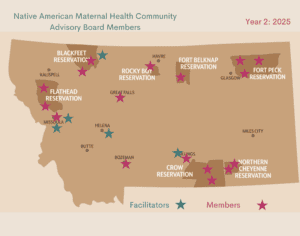
This vision was brought to life by Chelsea Bellon, Drew Babcock, and Amy Stiffarm, who represented these organizations focused on core priorities—ensuring statewide representation, providing financial compensation for participation, facilitating resource sharing, and amplifying community voices.

With support from the St. Joseph Fund, Montana’s first Native American Maternal Health Community Advisory Board (The CAB) was created.  Its founding members brought diverse perspectives and deep commitment to the work.  The founding members included: Adriann Ricker, Audrey Jackson, April Charlo, Ellen BigSam, Kaycee Martinez, Lauren Small-Rodriguez, Ticia Cliff, Savannah Smith, Mattea Grant, Danielle Vazquez, Margaret Ann Adams, Alissa Snow, Joshlyn Snow, Charlene Ramirez, and Julianne Denny. In its first year, The CAB focused on conducting a strengths, weaknesses, opportunities, and threats analysis, identifying resource gaps and needs, and creating space to share personal experiences that shaped and inspired their dedication to maternal health.

With the support and encouragement of our partners at St. Joseph Fund, The CAB was able to grow and prioritize growth and engagement for the second year. The New Year new and some returning members shared their interest and work related to maternal and family health. The second year of The CAB members are: Danna Runsabove, Dani Vazquez, Mary Ellen Lafromboise, Amber Daniels, Kaycee Martinez, Alyssa Schock, Melissa Gordon, Amber Birdinground Cummins, Ticia Cliff, Ni’Cole Triplett, Charlene Ramirez, Misty Pipe, Gerlinda Morrison, Jules Denny, Heather Fourstar, Donnell Buckles, and Sisi Whiteman. Additional facilitators and advisors include: Margaret Ann Adams and Diona Buck. In an effort to expand representation across the state, the second year CAB members capture Tribal program managers, healthcare providers, Birthworkers, and advocates supporting and leading maternal and family health initiatives in their communities.
Growth Initiatives

This year, the CAB will focus on collaboration and growth. CAB members will engage with organizations and working groups through brainstorming and listening sessions. They will also have access to engaging professional development opportunities that align with their cultural values.

Recently, CAB members met with University of Montana students to discuss programming opportunities to support families with special medical needs. They participated in discussions about available resources, the support they provide, and the gaps they have observed when seeking specialty medical care.

While the CAB does not function as an Institutional Review Board (IRB), it seeks to collaborate with organizations, committees, and working groups to engage in meaningful conversations that can guide improvements in maternal health outcomes and enhance understanding of Native perspectives in Montana’s urban and rural communities. Organizations or individuals interested in meeting virtually with the Native American Maternal Health Community Advisory Board can contact Chelsea Bellon at chelsea@hmhb-mt.org or fill out this Meeting Request Form.

The facilitators recognize the importance of supporting CAB members’ professional and personal development goals. CAB members can request financial support for training, education, or community-building initiatives related to maternal and family health. Nurturing and empowering leaders in this field remains a key priority.


MTPAL: One Number, Two Programs—Empowering Healthcare Providers for Moms and Kids

By Community Support, Maternal Mental Health

Thanks to Shawnalea Chief Goes Out, Perinatal Health Program Officer for the Member Health Management Bureau of the Health Resources Division, for authoring this guest post!

In Montana, healthcare providers now have a powerful new tool to support maternal and pediatric mental health through the Montana Psychiatric Access Line (MTPAL). Combining two vital programs—MTPAL for Moms and MTPAL for Children—this initiative expands access to expert consultation, resources, and training, ensuring that both mothers and children receive timely, high-quality care for behavioral health concerns.

One number, two programs.

PRISM for Moms and MAPP-NET is now Montana Psychiatric Access Line (MTPAL). Access perinatal and pediatric mental health care services at MTPAL.org or 1-844-40-MTPAL or 1-844-406-8725.

The MT PAL program is a comprehensive initiative designed to enhance the capability of health care providers in both maternal and pediatric settings. MTPAL for Moms focuses on expanding providers’ capacity to screen, assess, treat, and refer patients for maternal mental health and substance use disorders during or after pregnancy, ensuring holistic care for maternal well-being. Simultaneously, MT PAL for Children aims to integrate behavioral health into pediatric primary care, utilizing telehealth modalities to offer high-quality and timely detection, assessment, treatment, and referral for children and adolescents with behavioral health conditions. Both facets of the program emphasize the use of evidence-based practices and methods, striving to deliver effective and accessible health care for mothers and their children.

  • Training and Education for Treatment for Healthcare Professionals
  • Telehealth Consultation and Referral
  • Resource for Healthcare Professionals

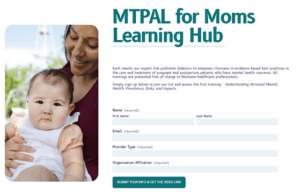
Announcing MTPAL for Moms Learning Hub

Each month, our expert hub publishes didactics to empower clinicians in evidence-based best practices in the care and treatment of pregnant and postpartum patients who have mental health concerns. All trainings are presented free of charge to Montana healthcare professionals.
Simply sign up on MTPAL.org to join our list and access the first training – Understanding Perinatal Mental Health: Prevalence, Risks, and Impacts.

Join us March 18,19th in Helena, MT for our combined Perinatal and Pediatric Mental Health Symposium https://www.umt.edu/pediatric-mental-health-symposium/ .Here we will be launching our new MTPAL Psychiatric Access Line along with providing great training and learning opportunities.

“Session Voices” & the 2025 Montana Legislature

By advocacy, Community

by Emily Freeman, HMHB Storytelling Coordinator and Mother Love Podcast Host

As Emily gears up for the release of new Mother Love episodes on the 2025 Montana Legislative session, she takes a moment to reflect on the process, and the people who shape it. 

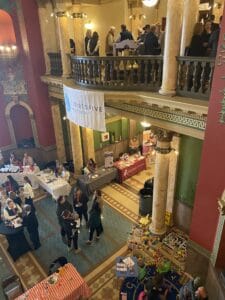
The Montana State Capitol during Montana Zero to Five’s 2025 Have a Heart for Kids Day.

If global politics feel out of reach, or national policies don’t seem to reflect your immediate on-the-ground concerns, I urge you to consider taking a closer look at what happens at a state level. This link will let you peek into the meetings and hearings of the current Montana legislative session. Here, in a sea of navy-blue blazers – with the occasional pop of a floral dress, or a wild beard – you can watch the slow but compelling work of statecraft. It’s a masterclass in interpersonal communication, restrained conflict and decorum (well…most of the time).  

The humanity is heartening: the vulnerability of an unpolished legislator stumbling through what may be their first time reading aloud at the podium; the low-level Dad jokes; the look of someone who’s clearly not a lifetime suit-wearer, but has forced himself into one because that’s what it takes to play the game. And the game is an important one.  

These 120 legislators are engaged in future work – planting trees in whose shade they may never sit, as the old saying goes. And they’re also doing past work, as they attempt to shift legislation from previous sessions into greater alignment with current needs, through policy changes or formal acknowledgement. 

It can be easy to fixate on the legislators who appear to be working tirelessly and unapologetically around an issue that seems out of touch with the most pressing concerns of their constituents. Or those who seem to have a personal grudge against one of their colleagues and starts to lose hold on their ability to control it as the day goes on. And yet, for the most part, the people in these meetings seem like they truly want to work together, to listen and learn, so that they may collectively advance policies that will uplift Montana.  

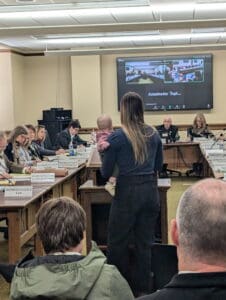
In these meetings you’ll also see non-legislators, ordinary Montanans delivering personal testimony in support, or opposition, of a bill. Watch enough meetings and you might just see someone you know standing at the podium, or speaking through Zoom, doing the brave work of letting their voice be heard in order to make change. I challenge you not to be moved by some of these testimonies: by the mom who drove halfway across the state to share about a challenge she faced with her child, and how a certain program or policy helped; by the advocate speaking on behalf of those who can’t do so on their own, but whose security hangs in the balance; by people who know firsthand what it means for state funding to make or break a life.  

Come for the feels, stay for the unintentional moments of comedy: the hot mic, the late-afternoon popcorn-munching in the back row of the House, the wrong button pushed, the sheepish apology. Legislative session meetings might just wind up being your new favorite reality show. 

Last session, I came to Helena in my role as Executive Director of the Early Childhood Coalition of Beaverhead County, participating in an advocacy day hosted by Zero to Five Montana. I’d lived in Montana for over a decade, and yet the legislative session had never felt accessible or — to be perfectly honest — all that interesting. But on that February day, standing in the rotunda, which in itself is a transformative experience (the architectural interiors of the statehouse are next level), watching ordinary people speak about their experiences navigating the early parenting years, entreating their legislators to take their concerns seriously, and thanking them for the ways that they already had, I realized that this experience truly is for everyone. Every Montanan, whether you’ve been here a week or a lifetime, is entitled to participate in the legislative session, in whatever capacity feels right to you.  

Session Voices guest, Mary Collins, testifying about HB360.

Political involvement can look like everything from traveling to Helena to speak at a podium, to leaving a voicemail, to simply making an effort to get to know the legislators from your own community when they’re not at work in Helena. Whether or not you voted for them, they’re now installed in their role to hear your concerns, your priorities, and your hopes for the future of our state. You don’t have to be a policy expert, or know the details of bills, in order to be involved (although if you are interested in doing so, this bill tracker is excellent and easy to navigate). 

My goal with “Session Voices”, the new Mother Love podcast miniseries, is to bring you guests who’ll help us all to understand the legislative landscape a bit more, and to explain the ways in which we can be a part of the process, whether it’s during the 90 days of the 2025 session, or during the many months and interim year between sessions, when laws aren’t made, but relationships can be. You’ll hear voices from across the legislative ecosystem, from policy experts to parents, and will hopefully gain a bit more understanding of how it all works, and how much of it is within your reach. You can find Mother Love on Spotify, Apple Podcasts, or wherever you listen. Our first episode, with Mary Collins from the University of Montana’s Center for Children, Families and Workforce Development, is live now, and on Monday you can hear my interview with Grace Decker, of Montana Advocates for Children. And if you have a great guest in mind (maybe it’s you!), feel free to reach out at stories@hmhb-mt.org.