Connection through storytelling: An evening with Roots Family Collaborative

By The Power of Story, Uncategorized

By Gwyneth Hyndman, HMHB Storytelling Coordinator 

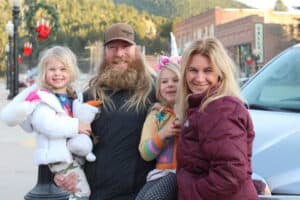
Photo credit: Cathy Copp
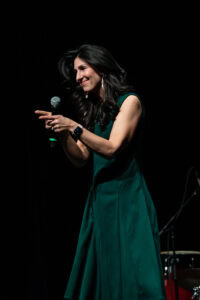
It is 4:53 p.m. in the afternoon on North 6th Avenue. I run towards The Elm, reminding myself that now is absolutely most definitely not the time to take a reflective moment.

It had been 13 winters since I had walked down this street in Bozeman – specifically to buy snowpants from the Walmart Supercenter on North 7th Avenue – and it’s hard not to pause to think about the turn my life took with that $19.99 purchase. 

It was my first season in Montana. I didn’t know if I would stay beyond April, I had told my college friend, Flora McCormick, in 2013 as she had held her newborn son on her couch and listened to me pendulum back and forth on where I belonged in the world. Everything was unsure and I obviously just needed to be alone, figure myself out, and commit to nothing. But I had just met this fly-fishing guide in Big Sky. He was bartending at the restaurant I worked at and when the moon was out, we’d sometimes go snowshoeing through the woods after our shifts. He had kind eyes. I liked how he saw the world. So I needed new snowpants.

Tonight, March 1, 2026, is the10th anniversary of the Roots Family Collaborative storytelling event “Moms Like Me” – the reason I am walking briskly across the street, sliding through the door, to find my HMHB co-workers and then a seat in the balcony of a full house before the lights dim. Flora is the Emcee and “Vibe Steward” – an aspect to this evening that feels warmly satisfying, like magnetic tiles clicking into place. The infant son she held in her arms that winter is nearly a teenager. 
And back on 6th Avenue, the seats of my Chevy Exquinox are littered with crayons, peeled-off socks, orange peels, fruit bar wrappers, a car seat and a booster. My daughters’ eyes are also kind, and they love the rivers of Montana as much as their dad. Those Walmart Supercenter snowpants haven’t fit me since 2018.

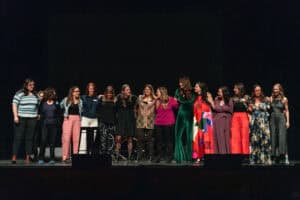
All around me – in the audience, on the stage, in the Mom Band – are humans who carry around a collection box filled with moments when life changes course. Maybe it’s as simple as committing to a pair of snowpants, which made another month of night snowshoeing possible, which arguably led to a wedding band from the Chico Hot Springs gift shop and two carseats.

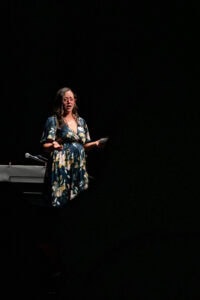
For storytellers Gabby McElwain, Bethany Green, and Mikeaela DiBerardinas, who bravely take over the stage to share their journeys of motherhood on a Sunday evening, the complexity and moments are gripping in their detail. We are right there in the trenches as Gabby remembers a postpartum magnesium drip being wheeled into her room, accompanied by barf bags and towels on ice, and a provider’s assurance that this is the worst she will ever feel in her life. We feel the chill as Bethany describes taking a call from her father, as she was beginning her own pregnancy journey. We walk in the warmth from Mikeaela, as she recalls the decision to embrace surrogacy, and a frank explanation her daughter offers to a stranger on the street.
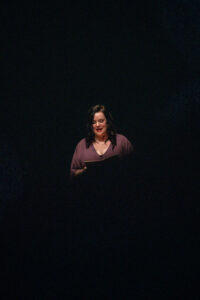
We laughed from the belly. We held our breaths. We winced. We nodded. Our jaws clenched. In the absence of a tissue box, we took a break to go to the bathrooms, unravelling toilet paper to stuff in our pockets.

We heard ourselves in these stories. We realized that the seats around us were filled with allies. And how true it was, in the words of Roots Family Collaborative Executive Director Suzanne Bendick, “We are not alone.”

And when the Mom Band performed “Dreams,” I couldn’t have been the only one to hear this Cranberries song from my teenage years, reverberating through the decades.  I opened the door of my car, settling into the driver’s seat with dustings of crushed popcorn, spying a discarded art project on constellations in the rearview mirror, as I turned the key in the ignition, murmuring this song that has taken on a new meaning.

Oh my life

It’s changing every day

In every possible way


And oh, my dreams

It’s never quite as it seems

‘Cause you’re a dream to me

Dream to me

Did you get a chance to attend Moms Like Me in Bozeman? Let us know if there was a story that was especially meaningful for you that night  – or if a story shared in the last 10 years at the Moms Like Me event has helped you in your parenting journey. You can reach us by emailing gwyneth@hmhb-mt.org
Also, don’t forget the Helena community has their own storytelling event coming to them this spring, hosted by The Early Childhood Collaborative and the Helena Village Collective. You can catch Families Like Ours at the Myrna Loy on Friday, May 8.

Tickets can be booked at https://www.ecchelena.org/families-like-ours
Celebrating 100 episodes of the HMHB LIFTS Podcast

By The Power of Story

Illustration of a fox dressed as a podcaster, wearing headphones and speaking into a microphone, representing the LIFTS/Mother Love podcast.In the third week of February, Healthy Mothers, Healthy Babies Montana marked the 100th episode of our LIFTS/Mother Love podcast.

In case you missed “Home Visiting and Hope” with guest Tehya Tiegan, which aired on February 18, Tehya shares her story of motherhood and healing beyond addiction and speaks on the challenges of navigating both social stigma and the legal system through her recovery journey.

In the spirit of the LIFTS podcast’s vision – nurtured by storytelling coordinator Emily Freeman, and before this, Claire Larson – the 100th episode was the latest to take an authentic look at parenting beyond the reels, posts and sleek ad campaigns around us, offering something more profound and deeply needed: connection, hope and a path forward.

Through five remarkable seasons, Emily and Claire have offered exactly that, gently collecting and curating the narratives from families and providers across Montana and holding them out to listeners who have tuned in across the state each month.

Many stories covered the gaps in maternal care in our state, and recognized the efforts being made to remedy this – often at a roll-up-the-sleeves grassroots level in Tribal lands, rural communities and urban neighborhoods of Helena, Missoula and Butte. Some of our guests are tackling these chasms in the Montana Legislature or as birthworkers at the forefront of perinatal and mental health care.

Other stories we’ve highlighted are from mothers, fathers, grandparents and caregivers who have had their worlds rocked when a newborn is brought home. And when –  as Claire and Dr Amy Stiffarm discuss in their introduction to the “Life’s Blessings” episode in their 2023 Native American Initiatives series – the “fantasy collides with reality.” There has been honest reflection as the curtain parted on tumultuous perinatal mental health journeys. And bravely shared moments in painful seasons that blindside us. And there has been a celebration of strengths – sometimes hidden – that emerged in the moments when we are required to rise.

Illustration of a cheerful fox celebrating with raised arms, representing joy and milestone achievement for the LIFTS/Mother Love podcast.As I mentioned a few weeks ago, one of my first projects with HMHB has been to catalog these podcast episodes. And as I’ve made my way through more than five years of storytelling – which began with the backdrop of a pandemic in 2020 – I’ve described crying tears, chuckling along at a truth being told, and how I’ve definitely driven around the block a few extra times just to hear the end of an episode. I’ve also, more than once, torn the headphones off my ears, pressed “Stop” on the treadmill, and turned around to moms I barely know at the gym to hold out my earphones like a glass of water in the desert and said, “You HAVE to hear this.”



As we look back on 100 episodes and prepare for what we can only hope will be a 1,000 more to come – here are just a few LIFTS/Mother Love “Staff Pick” episodes that have resonated with us.

Do you have a LIFTS/ Mother Love podcast from the last five seasons that was especially impactful for you? We want to hear about it – and why. 

Do you have a topic or issue you would love to hear discussed in the future? We value your ideas and feedback and want to hear more.

DM us on Instagram or Facebook or send an email to gwyneth@hmhb-mt.org

LIFTS logo – Linking Infants and Families to Supports, representing Healthy Mothers Healthy Babies Montana’s perinatal and family support programs.

Taking a beat for Heart Month

By Community

By Gwyneth Hyndman, HMHB Storytelling Coordinator 

Madison Torres stands outdoors with her 4-year-old daughter, Luna Torres, smiling together in a candid portrait that reflects connection and warmth.

Three years ago, my mother-in-law sent me a buoy bell wind chime for Mother’s Day.

When I first hung the iron bell outside our home in Philipsburg, it swung mightily with the late spring storms, then went quiet as we settled into summer. It came back to life with October winds, and receded into hibernation in December.  Snow, sun, rain, stillness. The years since have followed this pattern. Weeks will go by before it is moved into action and sometimes I forget the bell is there.

So when it clangs with the wind, I’m sometimes disoriented. Wait. Are we in the mountains or on the ocean? It stops me in my path. Often, when I am most in need of being stopped. 

Like carrying a tantruming child from the car up the steps of our porch. Or fleeing our rowdy house like it’s on fire, to hurl a bag of trash into the bin – an excuse for 38 seconds of peace. And almost always when I come back from work or a walk and brace myself for all the landmines of a dinner hour with picky eaters.

I hear that bell and it is as if a force outside my world stills me. 

Just take a beat, it says. And my pounding heart, in obedience to that echoing bell, begins to slow.

Our hearts get a lot of attention in February. There’s Valentine’s Day (and in case you missed her 2024 post, give yourself a treat and read Claire Larson’s very real blog on date nights here) Galentine’s evenings, heart-shaped cookies, pink-themed crafts and cards for classrooms packed into the pockets of backpacks. 

It’s also American Heart Month, highlighting cardiovascular disease – one of the leading causes of pregnancy-related deaths in the U.S. – and it’s a month when awareness is raised for congenital heart defects, affecting approximately one in 100 babies born each year.  We remember to schedule annual appointments, give blood, to make healthy choices in how we eat, exercise and sleep. 

But sometimes, in the everyday hustle, our hearts are the pieces of ourselves we neglect.

Madison Torres stands outdoors with her 4-year-old daughter, Luna Torres, smiling together in a candid portrait that reflects connection and warmth.

Madison Torres and Luna Torres, 4.


Two doors down from me, Madison Torres – pictured here with her daughter, Luna – describes her own ritual for calm as a mother of two, and small business owner with her husband, Raul.

As a child, Madison remembers being sensitive to raised voices in her household. Taking a moment to consciously step back and ask herself how she wants her children to feel when tensions are high, helps her to break this cycle.

“I hold my chest and try to feel my heartbeat,” Madison says. “If I can breathe through this, the thought process comes and I start to feel myself calm down.”

A hand on the heart is also how Sami Garrett, an Anaconda mother of two under 5, works through moments of overwhelm.

“I often stop, put my hand on my chest and ask myself ‘What does my heart need?’” says Sami, who created the online community Good Enough Matrescence (GEM) in 2024, in response to a growing need she identified – in rural communities especially –  for connection and accessible parenting resources. She starts with this grounding question to slow her adrenaline before moving on to the next task.

I’ll also say to myself ‘This should be happening,’” she says. “And instantly my shoulders drop and I can take some breaths.”

Sami’s words align with the first paragraph’s of the GEM manifesto:

We are no longer available for the pressure

The endless to-dos

The shoulds, the shame, the guilt, the striving to be the “right” kind of mom.

We are not here to perform perfection.

We are here to be present.

For Bozeman-based licensed child counselor and Sustainable Parenting founder, coach and   past LIFTS Podcast guest Flora McCormick ( you can find our 2024 podcast with her here) it’s a physical rock with the word “And” written on it, that she centers on to combat the maternal striving for impossible expectations, she identifies in herself and the world.

“This is something that comes from dialectical behavioral therapy,” Flora explains, referring to the behavioral therapy that focuses on mindfulness, emotional regulation, distress tolerance and interpersonal connections. “I’ve reflected on this often. So basically when we are saying something like ‘I just wish that I had more patience’… we continue on to say ‘AND I’m proud of myself for trying,’” Flora says. “‘AND’ has always been a really grounding word for me.”

Another mantra Flora said she took away from years of counseling:  All you can do is all you can do – and that is enough.

“Just in my hardest moments, beating myself up, thinking ‘why can’t I, why won’t they,’ ‘why haven’t I’  – these were grounding words to always come back to. I put it on a sticky note when I was first a parent and just looked at it and looked at it and looked at it.”

“It’s really that first form of radical acceptance,” she adds.  “It is a simple phrase, but to really sink into it and accept it, it means letting go of the ‘woulda, shoulda, coulda’ to allow this to be true. That’s pretty powerful.”

All you can do is all you can do – and that is enough.

Just about the kindest words I can tell my heart.

On a recent morning, as the girls run wild in the living room, I sit with a coffee on the couch, listening to them pretend they are running a vet clinic. I prepare to get up because there is so much to do. But the window is open on this too-warm February day. And as I watch the wind move through pines outside, I hear the bell.

I go ahead and take that beat. 

And this morning, for the sake of my heart, that is enough.


Photos by Gwyneth Hyndman

Stepping into a new season of storytelling

By Caregiving, Community, Community Support, Early Childhood, Maternal Mental Health, Parenting, The Power of Story

By Gwyneth Hyndman, HMHB Storytelling Coordinator 

I place Hamnet on my knee at page 207 and stare beyond the wing of the Boeing 737 window. My face is wet with tears I wipe away with a sweatshirt sleeve, feeling everything that powerful stories ignite.

Icy peaks of the Gallatin Range and Tobacco Root Mountains rise through the clouds, thousands of feet below as we head south and west towards the Pacific Ocean. I give Maggie O’Farrell’s imagined backstory of Shakespeare’s tragedy a pause so I can pull it together, accept the tissue handed to me from the woman in seat 27 B, and remind myself I’m only gone five days and that traveling alone right now is a luxury.

Instead, the ache to hold my daughters is almost gravitational.

Flying solo with Jessie and Eliza, now 6 and 4, were some of our first bonding moments. I had more than 40 years of travel on my own before I became a mother. After four pregnancy losses, I suspect part of me held back from planning beyond nine months. Both births became C-sections. I was never able to breastfeed successfully. I shook off fumes of failure every time I stood in the checkout line with baby formula at our local grocery store. But flying with each of them at six weeks old to visit my parents in California, watching skies, mountains, oceans, their sea shell earlobes and twitching noses as they slept in my arms, undisturbed by the world below, as the turbulence worked its magic, was like we were finding our footing. Up here, it was safe to fall in love with this new life in my arms, without feeling like I was tempting fate.

O’Farrell’s words were a reminder that this rose-hued season – with all its conveniently forgotten exhaustions, frustrations and nightmare toddler travel tales to come – is behind me now. And if you’ve read Hamnet, or watched the stunning film adaptation as it soars through the 2026 awards season, you’ll be aware that it is a guide through the darkest places a parent can walk.

Hamnet is a reminder that storytelling – both the story, and the telling of it – is illuminating.

In my first few weeks as the Storytelling and Engagement Coordinator for Healthy Mothers, Healthy Babies, I’ve made my way through half a decade of storytelling in Montana. I’ve cried while washing dishes and listening to “EnduringLoss with Emily Tosoni” in the first season of the Mother Love/LIFTS Podcast. I’ve stood in the middle of my office and said “Huh,” out loud to no one in particular, when a statistic hit home in the “Mining City Stories” series of Season 4. I’ve allowed myself to be unsettled and angry while watching Siloed, a documentary on the disparities in maternal healthcare in rural Montana, and more than once, as first-person narratives were shared in the last five years of our LIFTS Magazine, thought: Hey, me too.

Stories don’t just bring us to tears and leave us there. They can move us to take action. They ask that we clarify our purpose and at their best, face and explore our fears.

For those of us reading on our couch during naptime, or listening in our cars, stories can be ports in a household storm, a stolen hour of stability and connection in the chaos and devastation of the world outside.

For the storyteller, the very art is like dumping a purse all over the floor to sort out what’s actually been buried in there. We make decisions on what’s treasure and what’s trash every time we pick up a pen or open our laptop.

What do I hold on to? What can I throw in the garbage to make this handbag a little less heavy? What can I share that might be valuable?

As the team at Healthy Mothers, Healthy Babies sits down to map out our 2026 season of the LIFTS Podcast, and look ahead to the 6th annual issue of our LIFTS Magazine this summer, I’m honored to step into a role that Claire and Emily established and shaped with such respect, trust and tenderness, bringing our rich stories across Montana to the page and podcast.

If you have any thoughts on topics, issues and policies that you believe are important to parents, caregivers and providers in our state, you can reach me at gwyneth@hmhb-mt.org

And as always, we welcome your story submissions at stories@hmhb-mt.org

I’m so thrilled to read and hear your words in the months to come,

Gwyneth

HMHB-MT 2025 Year in Review

By Community, Uncategorized

As we look back on 2025, we do so with deep gratitude. This year reminded us again and again that meaningful change happens through partnership, listening, storytelling, and shared commitment. Every milestone reached was shaped by the dedication of families, advocates, providers, Tribal partners, policymakers, and organizations across the state who continue to show up for Montana families by supporting mothers and babies from pregnancy through age three.

Advancing Doula Licensure and Access to Care in Montana

In 2025, HMHB worked collaboratively with statewide partners, policymakers, doulas, birthworkers, The Montana Doula Collaborative and others invested in maternal health to pass legislation licensing doula practice in Montana. This important step paves the way for Medicaid reimbursement for doula services and expands access to doula care for families across the state, particularly those in rural and Indigenous communities.

Following the passage of the bill, we spent the remainder of the year working closely with the Montana Department of Labor and Industry to support thoughtful and intentional rulemaking for the doula workforce. We are deeply grateful to the many doulas and partners who contributed their expertise, time, and lived experience throughout this process.

Creating Doula Training

In collaboration with Montana doulas and birthworkers, we developed a training program for individuals seeking doula licensure. This learning management system supports training, education, and workforce development efforts across a variety of subject matter. The training is available at no cost to Montanans and will launch for public access in January 2026.

Supporting Indigenous Birthwork and Native American Initiatives

This year, we took early steps to grow the Native American Initiatives team into its own fiscally sponsored project within HMHB, focusing on Indigenous birthwork. While we look forward to sharing more about this work in the coming year, we are deeply proud of the collective efforts and momentum to support Indigenous birthwork in Montana, led by Dr. Amy Stiffarm and the Native American Initiatives team.

Throughout the year, the Native American Initiatives team continued building community within the Indigenous Birthworkers Network, supported family care spaces at powwows, and worked alongside partners to share newly created Indigenous Birth Preference Guides that support culturally grounded care.

In December, Dr. Amy Stiffarm and HMHB Executive Director, Stephanie Morton,  presented on allyship and organization building at the national BUILD Conference in Los Angeles, California. We are grateful for the opportunity to share Montana based work and allyship on a national stage.

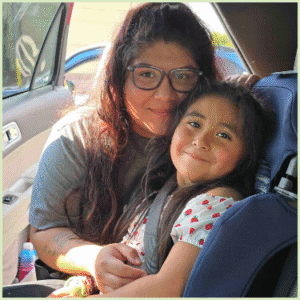
Mother and young daughter embraceCovering the Essentials

By November 30, 2025, our Essentials Program had reached 560 families across 29 counties and seven Tribal Nations, distributing 458 car seats and 315 safe sleep kits. These tangible supports not only protect babies, they help strengthen trust and connect families to the local systems of care that help them thrive.

Expanding the LIFTS Umbrella

In 2025, we rebranded the MotherLove Podcast into the LIFTS Podcast. By leveraging the trusted LIFTS brand, we aim to reach more listeners and continue amplifying the voices of Montana families and advocates.

This year marked the release of the fifth annual LIFTS Magazine, centering stories of lived experience from families across Montana. We remain humbled by the willingness of families to share their stories and by the power of showing when help helps. More than 14,000 copies of the magazine were distributed statewide.

We also worked to enhance the LIFTS Online Resource Guide to improve usability and ensure it functions well for all users. This work was guided by feedback from families and providers who rely on LIFTS every day.

Continuing Work to Destigmatize of Perinatal Substance Use Disorders

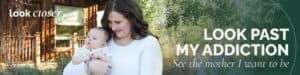
We continued strengthening the Look Closer campaign, a public health effort focused on decreasing negative bias surrounding perinatal substance use disorders and increasing kindness and compassion to support recovery. In 2025, we refreshed the campaign so that all artwork and models reflect real Montana moms and babies, alongside authentic Montana landscapes. It is our hope that this updated imagery allows the campaign to feel more personal, relatable, and rooted in the communities it is meant to serve. 

photo of a woman holding her baby in front of a barn

Connecting the Perinatal Mental Health Workforce

In June, HMHB hosted the 8th Annual Perinatal Mental Health Conference, welcoming approximately 332 professionals from across Montana, the Northwest, and parts of Canada. This gathering was one of our largest in person convenings to date and reflected the growing commitment to perinatal mental health across the region. We are looking forward to hosting the 9th Annual Perinatal Mental Health Conference next year in Billings on June 23 and 24, 2026.

In partnership with Montana PSI, we paved the way to launch the Montana Perinatal Mental Health Collaborative, creating a space for coordination, collaboration, and shared learning among providers and advocates.

We also continued working with partners across the state to explore the expansion of Infant and Early Childhood Mental Health efforts in Montana and the Montana Association of Infant Mental Health. This included hosting an IECMH Roadshow that invited stakeholders to help shape how these initiatives can best support families and behavioral health professionals statewide.

Strengthening the Montana Workforce

HMHB hosted an in person convening of the Montana Home Visiting Coalition in September and co-convened several trainings throughout the year. Together with partners, we focused on strengthening the home visiting workforce, sharing resources, supporting home visitor safety, and advancing legislative investments that help this essential work grow.

We are deeply grateful to Sarah Corbally for the work she has done to grow the Home Visiting Coalition and help shape policy in Montana. While her work will take a new direction in January, her impact on moms, babies, and families across the state will be felt long into the future.

We also continued co-convening the Montana Early Childhood Coalition alongside Montana Zero to Five.  These monthly meetings bring together early childhood advocates from across the state to share partnership, advocacy opportunities, funding updates, and training. In September, we were grateful to gather in person for a statewide convening.

Stephanie MortonHonoring Leadership

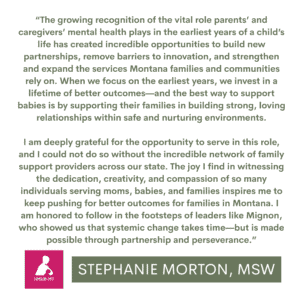
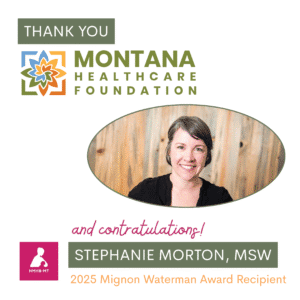
In 2025, Stephanie Morton was honored with the Mignon Waterman Award from the Montana Healthcare Foundation in recognition of her leadership in expanding access to behavioral health services for pregnant and postpartum women. We are grateful for Stephanie’s steady leadership, care, and vision. She leads her team with such grace and intention and we are all extremely proud of her.

Growing our HMHB Team

We were so happy to welcome Mary Collins as our Policy Coordinator in October. Many of our partners already know Mary well, and her leadership and experience strengthen our ability to engage in advocacy and policy work that centers families.
Looking ahead, we are excited to welcome a new Storytelling and Engagement Coordinator in January. This role reflects our commitment to amplifying lived experience and deeply integrating family stories into our policy and systems work.

We will also be welcoming a new Operations Coordinator to help streamline organizational operations, allowing leadership to focus more deeply on strategic and programmatic direction. We invite you to visit our Meet Our Team page in January to learn more about these new team members.

Moving Forward with Gratitude

This year was marked by growth, uncertainty, and resilience, including navigating a shifting federal funding landscape. Through it all, we were sustained by the strength of our partnerships and the shared belief that families deserve care, dignity, and support.

As we move into the new year, we do so with humility, gratitude, and hope. Thank you to every partner, funder, advocate, provider, and family who walked alongside us in 2025. If you’ve read this far, no doubt you are one of those individuals and please know that we appreciate and value you. We are honored to continue this work together.

When families have what they need, babies are safer and communities are stronger. If you feel called to support this work, we welcome your tax-deductible donation to Healthy Mothers Healthy Babies – The Montana Coalition. $75 helps place a baby safely in a car seat; $135 helps ensure a safe sleep space. If you feel called to donate, visit hmhb-mt.org/donate.

LIFTS Out Loud: Ryan’s Journey Home

By Caregiving, Community Support, Dads, Early Childhood, Parenting

By Callie Triller & Jake Maher

This story appears in the 5th Annual LIFTS Magazine, where Montana parents share honest experiences about connection, resilience, and the journey through early parenthood.

By Jake:

Before my son Ryan was born, my life was spiraling out of control. I wasn’t a productive member of society, and was just lost. I was in jail when I discovered I’d become a dad, and Ryan’s mother and I were no longer together.

I eventually got into the drug court program, and went to treatment, and that’s when Callie and her family got involved as foster parents.
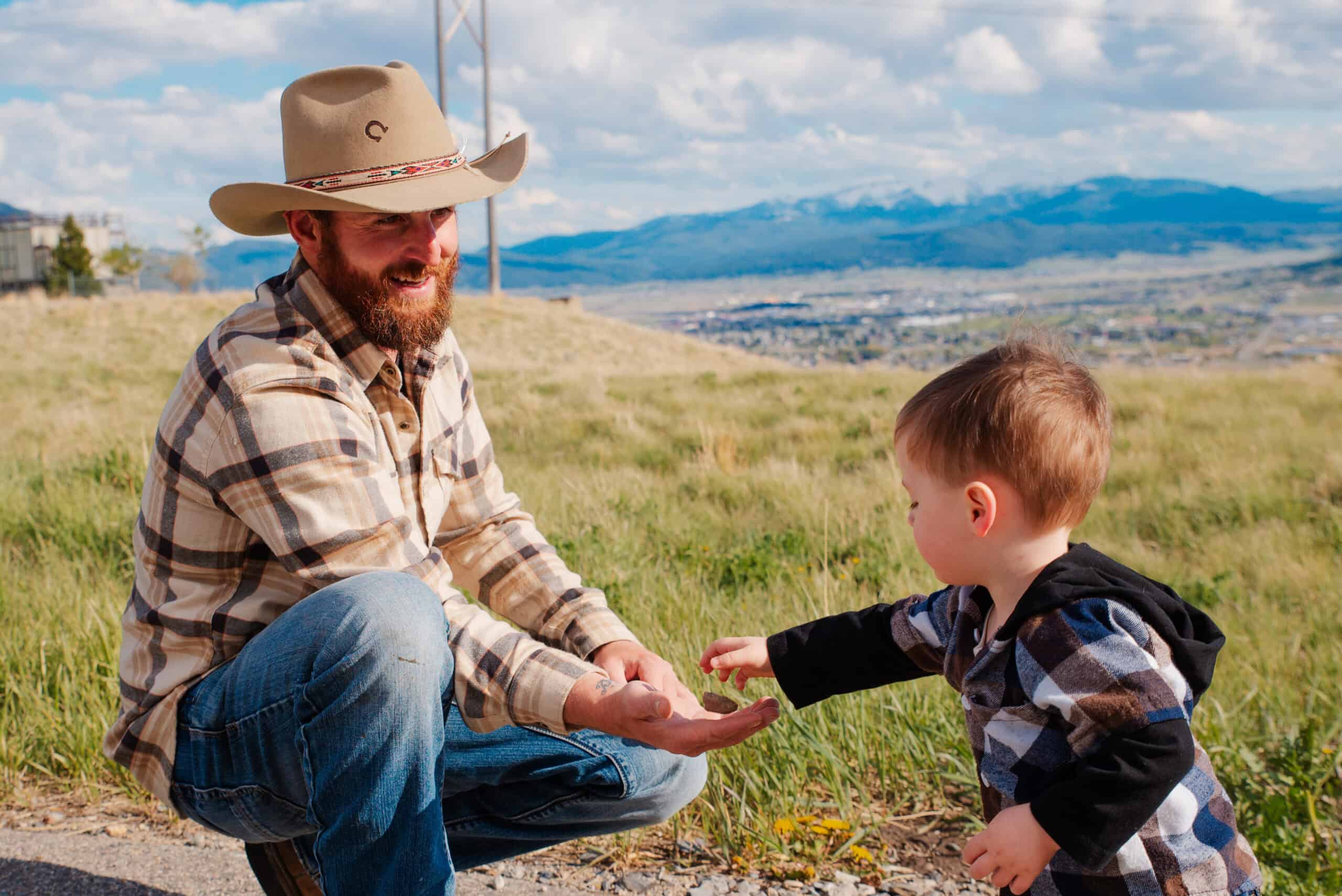
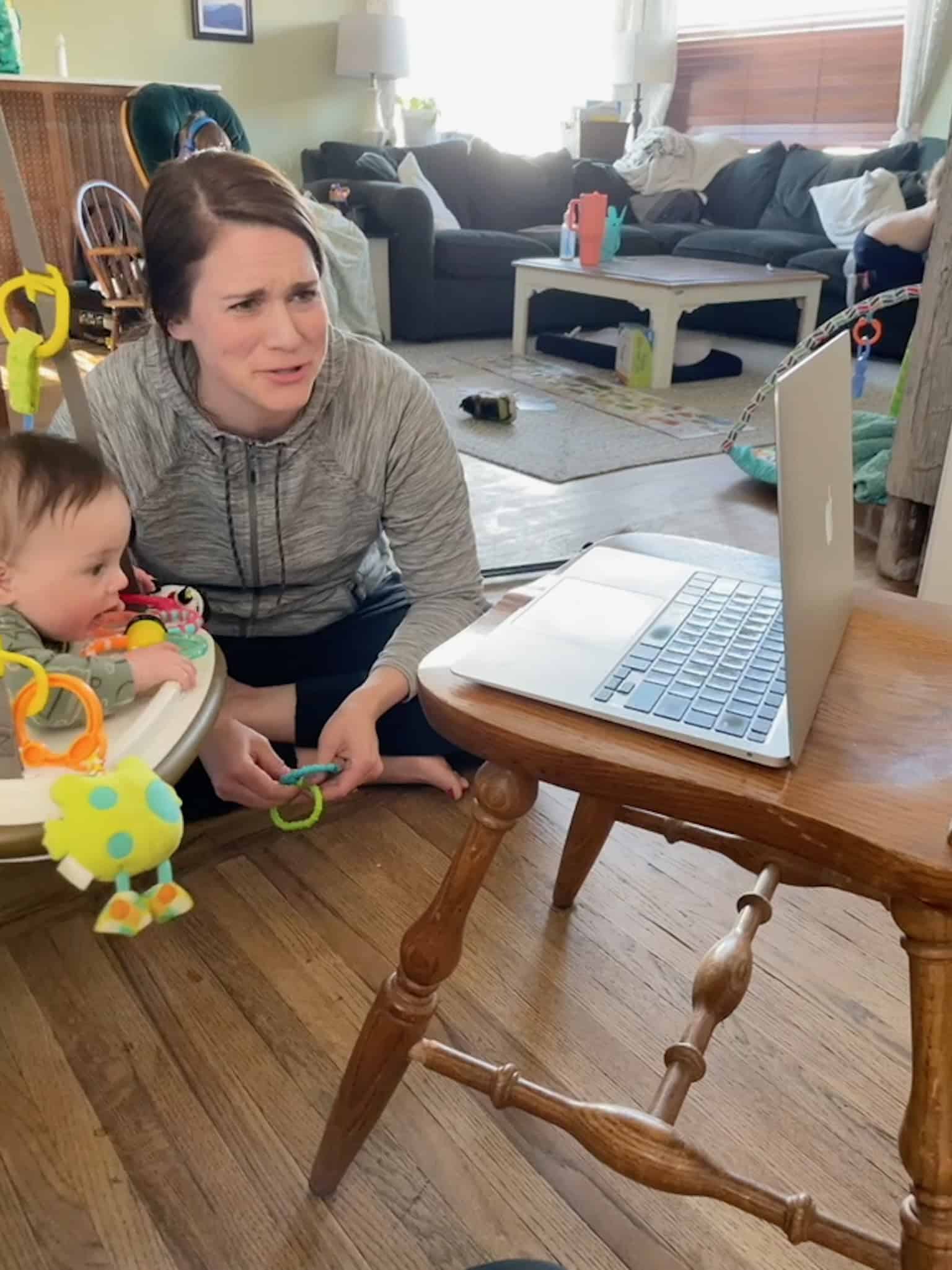
I started doing weekly video calls with them, which Child Protective Services (CPS) encouraged. Callie sent me a notebook and a pen, and said if you want to write a letter to Ryan, we’ll read it to him, so I did. She and her family were so supportive of me. They sent care packages while I was in treatment, they sent pictures and a photo album, and wrote to me about what it had been like since the day they got him. They saw me as a person who was struggling and needed a lot of extra encouragement, and were always helping work towards the goal of reunification. When I got back from treatment, Callie would drive Ryan to me for my supervised visits, twice a week for an hour each.

I took parenting classes, got enrolled in an intensive outpatient program, and went to 12-step meetings. Ryan was the reason I didn’t give up. I didn’t really look at that as an option at that point. I just wanted to be with him.

When he finally came to live with me, I continued these efforts, attending recovery meetings and taking every parenting class that I could. I wasn’t court-ordered to do these things, but felt it was necessary to keep me on the path that I was on. I wanted to take full advantage of every opportunity I could that would give me greater chances of having Ryan permanently. I’ve learned that the more you put into something, the more you get out of it. That’s why I went all out, and did everything I possibly could to better my chances of getting him back. I work full-time, Monday through Friday, and Ryan goes to daycare. He’s just started walking, and has been communicating more. It’s not so much like a guessing game anymore – he can actually let me know what he wants. The communication between the two of us, growing together, and having the bond that we do is a huge win.

Eighteen months ago, I never would’ve thought that I’d be where I am today.

By Callie:

When we started fostering, we knew we would need every resource at our disposal. With every placement, it held true – we needed friends, babysitters, doctors, and community to support us so we could love and support each child who walked in our doors. Baby Ryan was no exception. He came to us straight from the NICU after a pre-term birth, and we immediately enlisted as many friends as we could to take turns holding and rocking him, knowing he needed all the love we could provide.

As a child in Montana’s foster care system, Ryan qualified for many public benefits, including Medicaid, WIC, and the Best Beginnings Scholarship. Through Medicaid, we were able to quickly connect with an occupational therapist familiar with feeding premature infants. She educated us on proper bottle placement and techniques to allow him to drink as much formula as he could so that he would grow stronger. His occupational therapist also worked to provide him positive sensory touch, and coach us on how to best care for him as his body and brain developed outside of the womb.

Medicaid also paid for all of his well-child check-ups. Over the course of the year that Ryan lived with us, his primary care provider helped us navigate some difficult illnesses and directed us to the proper treatments when there were milestones he was slow to meet.

We connected Ryan with the WIC program, which paid for most of his formula throughout the first year, helped track his growth and development, and provided us with nutrition support as Ryan transitioned to solid foods.

Once Ryan worked his way into a more routine schedule and got bigger and stronger, we enrolled him at a high-quality early childhood program in our community, utilizing the Best Beginnings Scholarship, a state-funded program that helps families cover the costs of childcare.

We had no idea that one of the coolest parts of fostering Ryan would be getting to know his biological parent. I remember learning that Jake had chosen to go to treatment and I literally cheered! When he asked to do Zoom visits through treatment, we were so happy to help make that happen. As soon as possible, we wanted Ryan to know his dad, and for Jake to be continually motivated by all the sweet coo’s and big brown eyes Ryan could give.

After Jake finished treatment, and in-person visits started, we got to know him even better – seeing him at least once per week. We were inspired by his hard work and dedication to both his sobriety and his parenting. He was utilizing every resource he could for himself, just as we were utilizing every resource we could to support Ryan.

As visits progressed from “supervised” to “monitored”, and then from a day at a time to overnight, we got to witness Jake and Ryan’s bond flourish until our very final handoff. I was tearful, as I knew I was saying goodbye to the sweet little boy who had lived with us for the past 15 months. But Ryan crawled right over to Jake who picked him up. He then looked at me with a big smile and just waved. He knew he was home.


Professional photos by Highland Creative Solutions.


Visit hmhb-lifts.org for local resources using the search terms “Family Support & Education”, “Substance Use Disorder Treatment Providers”, and “Birthing & Parenting Classes”.


Finding Strength Through Motherhood, Loss, and Healing: A Story from Chile to Montana

By Maternal Mental Health

Guest post by Catalina Geyger

Growing Up in Emotion and Resilience

I grew up watching my mom ride the highs and lows of her emotions. From a young age, I knew sadness and tears. Born and raised in Santiago, Chile, I took medication and did therapy through high school just to survive the day and ride horses after. That world kept me sane.
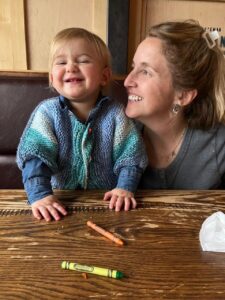
My mom died of colon cancer when I was 23, and I was devastated. It pushed me to leave the country, travel, and work with horses. On one trip, I visited my aunt in Montana and met my husband while helping at a remote bar. I never imagined marrying him and living here. When my grandpa met Reed, he said he was a good man—that stuck with me. We married and got a horse thanks to my father-in-law, who drove six hours so I could see one. I felt at home.

I know myself enough now to do things for me, whether going to a city for my nails or riding for a while. But admitting that need isn’t always easy. I’ve always been honest with Reed about my feelings, thoughts, and crazy ideas, and even when he doesn’t understand, he lets me be.

My First Birth and Postpartum Experience

When our first son was born, I experienced it all—baby blues, excitement, nervousness, sadness, fear. It was winter, during COVID, the baby was tiny, jaundiced, and breastfeeding struggled. Reed went out to feed cows every day, and the four walls felt tight. I needed help. After a couple fights, I admitted my jealousy that he could leave while I couldn’t. Then my father-in-law started taking the baby and me to see the horses nearly every day. I also asked my doctor for my “happy pills,” which help me be happier.
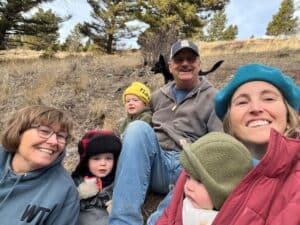
Before our second child, I was off medication but knew I’d restart afterward. Breastfeeding didn’t last long, and formula worked best. I kept taking medication, adjusting doses until I found what worked. Seeing myself more at peace, I now tell pregnant friends it’s okay to take medication—it doesn’t mean forever, and that’s fine too.

Seeking Therapy and Real Support

When our third child was born, I needed more than medication. I drove an hour to the city twice a week for therapy sessions, and it was life-changing. Even surrounded by loving people, you can feel alone, and having non-judgmental support made all the difference.

I am lucky—not just for my family, home, and raising my kids, but because Reed’s family hugs me like my mom did, listens to my ideas, and loves me through highs and lows. Losing my mom taught me life is short. I believe she moved things so I could meet Reed, wake up to mountains and cows, and build this life. I am grateful every day.

Maternity leave in the U.S. is hard—you work like you have no kids and raise kids like you don’t work. Not all jobs offer more than four to six weeks, so you have to be lucky. I wish more people knew they could ask for help and use resources, even when money is tight. Small steps to care for yourself make each day easier.
Finding Light in Hard Seasons

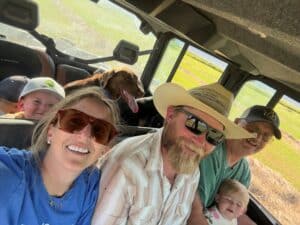
Winter is still hard—cold, isolating—but a sunny day can lift everything. Even through sadness, fear, or exhaustion, joy, connection, and gratitude are possible. That’s what keeps me going.


Versión en Español

Crecí Entre Emociones y Fortaleza

Crecí viendo a mi mamá subir y bajar con sus emociones. Desde pequeña conocía la tristeza y las lágrimas. Nací y crecí en Santiago, Chile, y durante toda la enseñanza media tomé medicación e hice terapia solo para sobrevivir el día y montar a caballo después. Ese mundo me mantenía cuerda.
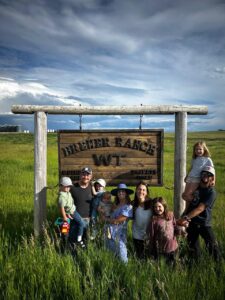
Mi mamá murió de cáncer de colon cuando tenía 23 años y me devastó. Eso me impulsó a salir del país, viajar y trabajar con caballos. En un viaje, visité a mi tía en Montana y conocí a mi esposo mientras ayudaba en un bar en medio de la nada. Nunca imaginé casarme con él y vivir aquí. Cuando mi abuelo conoció a Reed, dijo que era un buen hombre; eso se me quedó grabado. Nos casamos y conseguimos un caballo gracias a mi suegro, que manejó seis horas para que pudiera verlo. Me sentí en casa.

Ahora me conozco lo suficiente para hacer cosas para mí, ya sea ir a la ciudad a hacerme las uñas o montar un rato. Pero admitir esa necesidad no siempre es fácil. Siempre he sido honesta con Reed sobre mis sentimientos, pensamientos e ideas locas, y aunque a veces no entienda, me deja ser.

Mi Primer Parto y el Posparto

Cuando nació nuestro primer hijo, pasé por todo: tristeza posparto, emoción, nervios, pena y miedo. Era invierno, en plena COVID, el bebé era pequeño, tenía ictericia y la lactancia no funcionaba bien. Reed salía todos los días a alimentar las vacas y esas cuatro paredes se sentían pequeñas. Necesitaba ayuda. Tras un par de discusiones, le confesé que sentía celos de que él pudiera salir y yo no. Entonces, mi suegro empezó a llevarnos al bebé y a mí a ver los caballos casi todos los días. También pedí a mi doctora mis “pastillas felices,” que me ayudan a estar mejor.
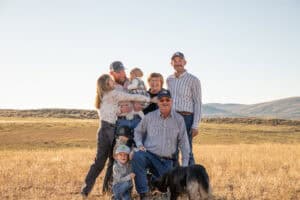
Antes de nuestro segundo hijo, había dejado la medicación, pero sabía que la retomaría después del parto. Intenté amamantar otra vez, pero la fórmula funcionó mejor. Seguí tomando medicación, ajustando dosis hasta encontrar lo que me funcionaba. Al sentirme más en paz, ahora les digo a amigas embarazadas que está bien tomar medicación; no significa para siempre, y también está bien si lo es.

Terapia y Apoyo Real

Cuando nació nuestro tercer hijo, necesitaba más que medicación. Conduje una hora a la ciudad dos veces por semana para terapia, y fue transformador. Aunque estés rodeada de personas increíbles, puedes sentirte sola, y ese apoyo sin juicio marcó la diferencia.

Soy afortunada, no solo por mi familia, nuestro hogar y criar a mis hijos, sino porque la familia de Reed me abraza como lo hacía mi mamá, escucha mis ideas y me quiere en los altos y bajos. Perder a mi mamá me enseñó que la vida es corta. Creo que ella movió las cosas para que conociera a Reed, despertara con montañas y vacas, y pudiera construir esta vida. Estoy agradecida todos los días.

La licencia de maternidad en EE. UU. es difícil: trabajas como si no tuvieras hijos y crías a tus hijos como si no trabajaras. No todos los trabajos dan más de cuatro a seis semanas, así que hay que tener suerte. Ojalá más personas supieran que pueden pedir ayuda y usar recursos, aunque el dinero sea poco. Pequeños pasos para cuidarse hacen los días más llevaderos.

Encontrar Luz en las Temporadas Difíciles

El invierno sigue siendo duro, frío y aislante, pero un día soleado puede levantar todo. Incluso con tristeza, miedo o cansancio, es posible encontrar alegría, conexión y gratitud. Eso es lo que me mantiene adelante.

Professional photos by M.Kaye Photos.

If Catalina’s story resonates with you, remember: you don’t have to navigate parenthood alone. LIFTS offers a free, statewide resource guide connecting Montana families to mental health supports, parenting programs, and community resources. Explore local help, practical tools, and more at hmhb-lifts.org — because even small steps toward support can make a big difference.

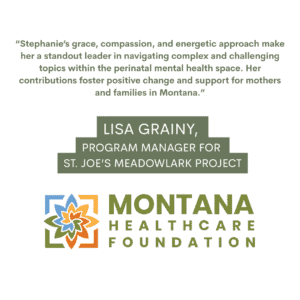
Stephanie Morton, MSW, 2025 Announced as Montana Healthcare Foundation Mignon Waterman Award Winner 

By Maternal Mental Health

We’re honored to announce that Stephanie Morton, Executive Director of Health Mothers, Healthy Babies – The Montana Coalition (HMHB), is this year’s Mignon Waterman Award recipient in recognition of her leadership in making behavioral health services available to pregnant and postpartum women. Stephanie’s dedication to relationship-building, collaboration, and advocacy has driven innovation in and better access to perinatal mental health care across the state.

About the Award

In 2017, the Montana Healthcare Foundation created the Mignon Waterman Award to honor the life and legacy of their founding trustee, a tireless advocate for behavioral health in Montana. Each year, they accept nominations for individuals who embody the spirit of the award and have made significant contributions to improving behavioral health in Montana. Learn more about Mignon, the award, and previous recipients here.

Stephanie’s Impact

Under Stephanie’s leadership, HMHB has become a statewide anchor organization that supports better perinatal outcomes through providing organization, education, advocacy, programming, and training to communities statewide. Stephanie has made perinatal mental health a significant focus of HMHB’s work.

Stephanie’s dedicated, effective advocacy played a key role in two new policies that will improve care and outcomes for pregnant and postpartum women. In 2023, she advocated that Montana extend Medicaid coverage for pregnant women through one year postpartum (a critical period for recognizing and treating depression and other behavioral health conditions). In 2025, she collaborated with a diverse group of stakeholders to successfully advocate for a bill that created a license for doula services, a crucial step toward achieving public and private health insurance reimbursement. Both policies were passed and will improve access to care for many Montana families.

Stephanie and HMHB’s Major Initiatives

HMHB developed LIFTS (Linking Infants and Families to Supports), a statewide online resource guide, print magazine, and podcast that connects families to available resources – like mental health providers, substance use treatment, and support groups – in their community. This up-to-date database offers resources for urban, rural, and Native communities and is relied on by Meadowlark care coordinators in OB offices across the state. The annual magazine shares stories from Montana caregivers and normalizes accessing help at this critical time of life. The LIFTS Podcast shares stories about individuals who are transforming the care system for Montana mothers, babies, and families. It highlights innovative practices from direct service providers and perinatal mental health champions across the state.

HMHB prioritizes outreach to Native communities. Their innovative approach to partnership development is outlined in a 2024 article published in Health Affairs titled, “A Strategy to Support Perinatal Mental Health by Collaborating with Tribal Communities in Montana.” Under Stephanie’s leadership, the Native American Initiatives Program has continued to grow in connection with those serving Native families across Montana.

Stephanie is committed to collaboration and solving problems through building strong partnerships. Through her relationships with organizations like the Montana Psychiatric Access Line (MTPAL), the Maternal Supports (MOMS) Program, and The Meadowlark Initiative®, Stephanie has played a crucial role in leading discussions and crafting toolkits to train caregivers in maternal mental health, facilitate organizational systems change, and improve health outcomes for moms and families.

We are grateful to the Montana Healthcare Foundation for all the strategic investments they make to improve health in Montana and for recognizing Stephanie’s work and supporting perinatal mental health across the state.

Mother Love is Now the LIFTS Podcast!

By Uncategorized

By Emily Freeman, Podcast Host and HMHB Storytelling Coordinator

New Season, New Name! 

For the past five years, the Mother Love Podcast has been sharing stories of parenting and caregiving in Montana, illuminating the challenges and triumphs of the 0-3 years. In conversation with providers, families, advocates, and more, our podcast aims to illuminate both the challenges and celebrations of pregnancy and parenting, and to provide a space to learn, listen, and uplift Montanans across our vast state. 

Starting this fall, Mother Love is getting a new name: the LIFTS Podcast. You can expect the same great content, but with a show title that fits neatly in line with some of other other projects: the LIFTS online resource guide, and LIFTS magazine. LIFTS stands for Linking Infants and Families to Supports, and it’s one of the things that we do best at HMHB. Additionally, we wanted the name of the podcast to acknowledge the full range of people who support and navigate the perinatal journey: including dads, grandparents, foster parents, and more. 

Exciting Episodes and Voices Coming Your Way

While our name is new, our mission hasn’t changed: to share honest conversations, highlight voices of lived experience, and bring attention to perinatal mental health and family well-being in Montana. We invite you to follow along as we launch new episodes starting in October, featuring a variety of voices and perspectives from around the state. In conversation with Maureen Ward of DPHHS, and Tracie Kiesel from Buckle Up Montana, we’ll learn about Montana’s new carseat law, which brings our state in line with federal safety guidelines. We’ll chat with Suzanne Bendick, of Roots Family Collaborative, about the power of live storytelling to provide a space for connection and healing. And we’ll hear from Mindy Petranek, one of the writers featured in our 2025 LIFTS magazine, about the process of sharing her experience on the page. 

Tune In and Join the Conversation

We hope you’ll tune in and join us for the upcoming season of The Lifts Podcast, which you can find on our website, Spotify, or Apple Podcasts. And if you’ve got a great idea for a guest, let us know! You’re welcome to email us at stories@hmhb-mt.org.

Just Showing Up

By Parenting

By Mindy Petranek

This story appears in the 5th Annual LIFTS Magazine, where Montana parents share honest experiences about connection, resilience, and the journey through early parenthood.


It can be challenging to make friends in your adult life. I can’t count the number of times I’ve tried to connect with people and then they don’t ever call back. I just really crave that community.
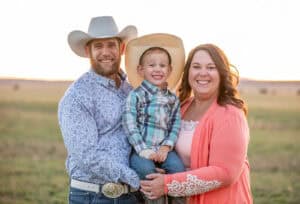
We live on a ranch, a cattle operation, so things run around the schedules of what’s happening at the time: calving, branding – ranching kind of stuff.  

One Christmas, my husband got me a gift certificate to a pottery class. I was super excited, but when it came time for the class, calving had begun. He said he thought I’d be able to sneak away for a couple hours in the evenings, but when it came down to it, we couldn’t make it work. We didn’t have any childcare, and it was just too crazy of a time.

Sometimes you have to cancel plans, and do what maintains your livelihood. 

I was stuck in a period of feeling really low and lonely, and didn’t know how to break the cycle. I started looking for resources and found a baby storytime in the nearest big town. So I took a chance.

My son had really long hair at the time, and one week this gal came up to me and complimented his hair. That’s all it took: just her kind openness to tell me it was okay that I was doing things differently. 

The next week I went to the library again, and saw the same gal. I thanked her for what she’d said about my son’s hair. She told me she was starting a mom’s group, and invited me to join. We exchanged numbers, and that’s how I started going to the Bad Moms Group.

The name of the group either sparks an interest or people are turned off by it. I love the truth of it, cause as a mom there are so many moments where I feel like I’m botching the job. 

The moms group was an hour’s drive away, and the first time I went I was nervous, but excited to be out of the house by myself, listening to music as loud as I wanted. I felt like I had a grip on a little of me. When you become a mom, you can lose yourself, and it’s all about figuring out how to reinvent.
The way the group works is you just show up. Each meeting starts with the mission statement: to create a safe space for mamas to share in order to gain understanding and compassion for ourselves and others. Zero judgment. No one is to repeat what we say here. No interrupting, and only give input if the person sharing welcomes it or is asking for advice. 

Connecting with other women about the challenges of motherhood gave me reassurance, comfort, and camaraderie. It was so much better than just packing all of my feelings into a hole and telling myself that I’m tough enough to handle it. A friend in the group once said to me, you’re always so tough – do you ever get tired of being tough?

A moms group can help you find a better head space, which will be tenfold worth it for yourself and your family. You can’t understand how much you need that outlet till you’re on your drive home and thinking: oh, I feel like me again. 

Just stick with it and go out of your comfort zone. It will be worth it. A little bit of discomfort will help you grow.

Stories like this remind us that finding connection can make all the difference. If you’re looking for parenting support, mental health resources, or ways to connect with other families, visit HMHB-LIFTS.org.